*Results vary by part geometry, elastomer type, and material surface area. †60–90% particle risk reduction based on internal testing; independent VCQ validation is in progress. ‡Bioburden reduction 92–100% per ISO 11737-1 testing; bioburden is not a monitored parameter in the VeriClean certification standard.
The Specification Gap
No One Owns
Modern infrastructure demands ultra-pure coolants and stable flow characteristics. Yet cooling loops continue to rely on commodity seals from McMaster-Carr and Grainger—suppliers with zero cleanliness controls or verification protocols.
Mechanical Engineers
Specify material properties: EPDM, FKM, PTFE durometer and temperature ratings.
Coolant Chemists
Specify compatibility matrices and chemical formulations.
Cleanliness Specs
COMPLETELY UNCONTROLLED
"If it's not surface-verified, it's an uncontrolled variable in your thermal architecture."
Industry Research Confirms the Risk
"These cold plates have very small channels that can easily become clogged, placing the chip at risk of overheating and damage, thus requiring very stringent control of the coolant composition."
The Filtration Dilemma
In high-velocity microchannel cooling systems, filtration isn't free—it's a hydraulic tax that costs pressure, power, and margin.
The Engineering Tradeoff
To protect microchannels, you need ≤5-10 µm filtration. At D2C flow velocities (several m/s), that level of filtration causes unacceptable pressure loss.
Industry Reality
Most HPC systems avoid fine filtration entirely. Instead, they use coarse strainers (20-50 µm) and rely on component cleanliness upstream.
As filters load, ΔP rises → pump margin evaporates → flow instability
Fine filtration becomes operationally impractical at required velocities
VeriClean Seals™: Source Control, Not Downstream Mitigation
Uncontrolled seal-derived particulates force system designers to pay a continuous hydraulic tax: higher pump pressure, higher energy consumption, increased heat input into coolant, and reduced operating margin as filters load.
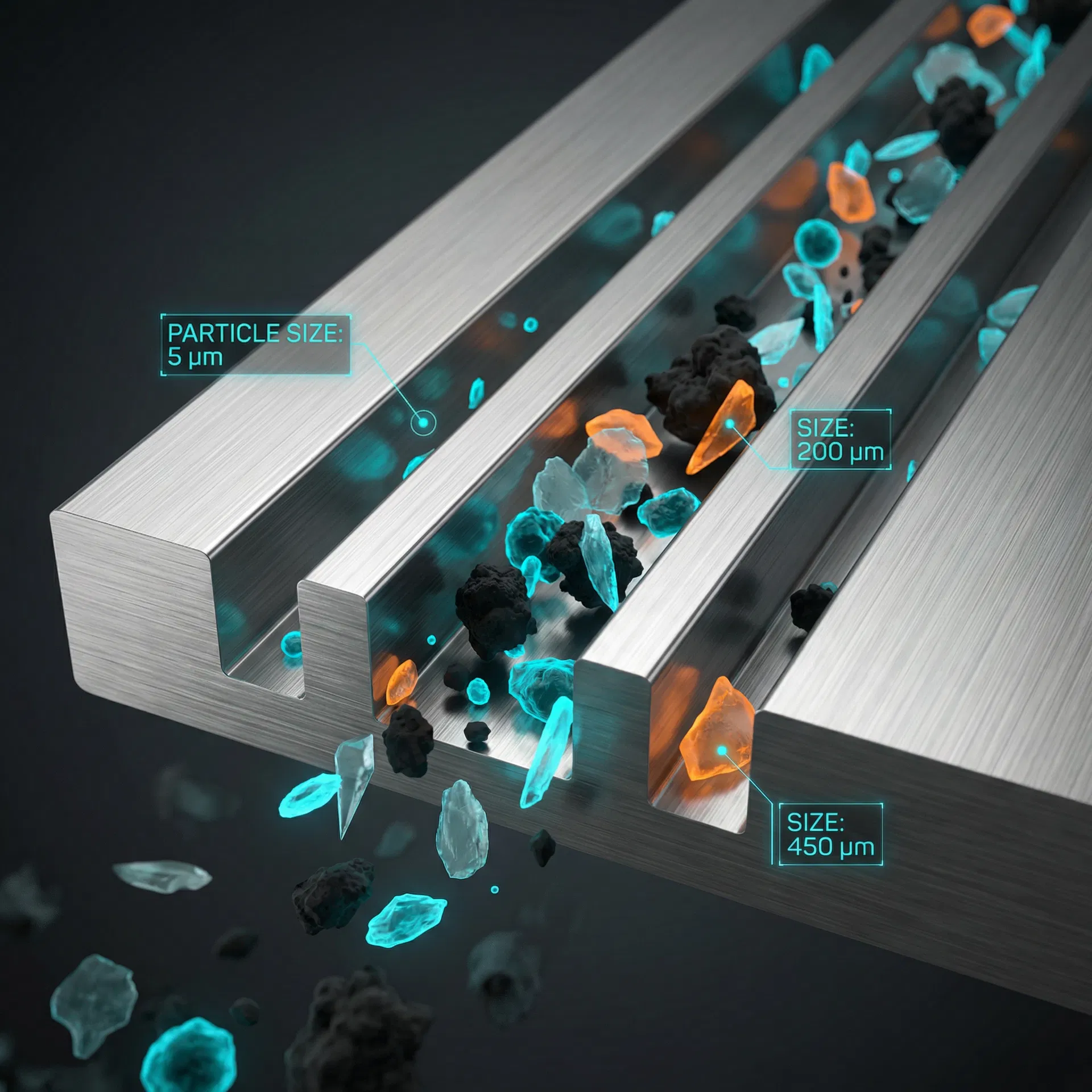
Microchannel Vulnerability
Direct-to-chip cold plates operate with extremely high fluid flow rates through microscopic channels. Suspended particulate contaminants inevitably produce fouling, scale formation, and blockage.
Particle Migration
Contaminants travel downstream from seal installation points directly to cold plates, lodging in microchannel restrictions.
Throttling & Derating
Increased delta-T across cold plates triggers automatic performance derating—reducing computational output.
Pump Mechanical Wear
Abrasive fines cause cavitation damage and impeller erosion, accelerating pump failure.
VeriClean Seals™: Reliability Insurance
Eliminate seals as a contamination risk factor through proactive surface cleanliness verification—not reactive troubleshooting after deployment.
Verified Particle Reduction*
Documented particle load reduction compared to commodity alternatives, verified through optical microscopy and laser particle counting (1.3µm lower bound, 16 size bins to 50µm+).
Cleanroom Processing
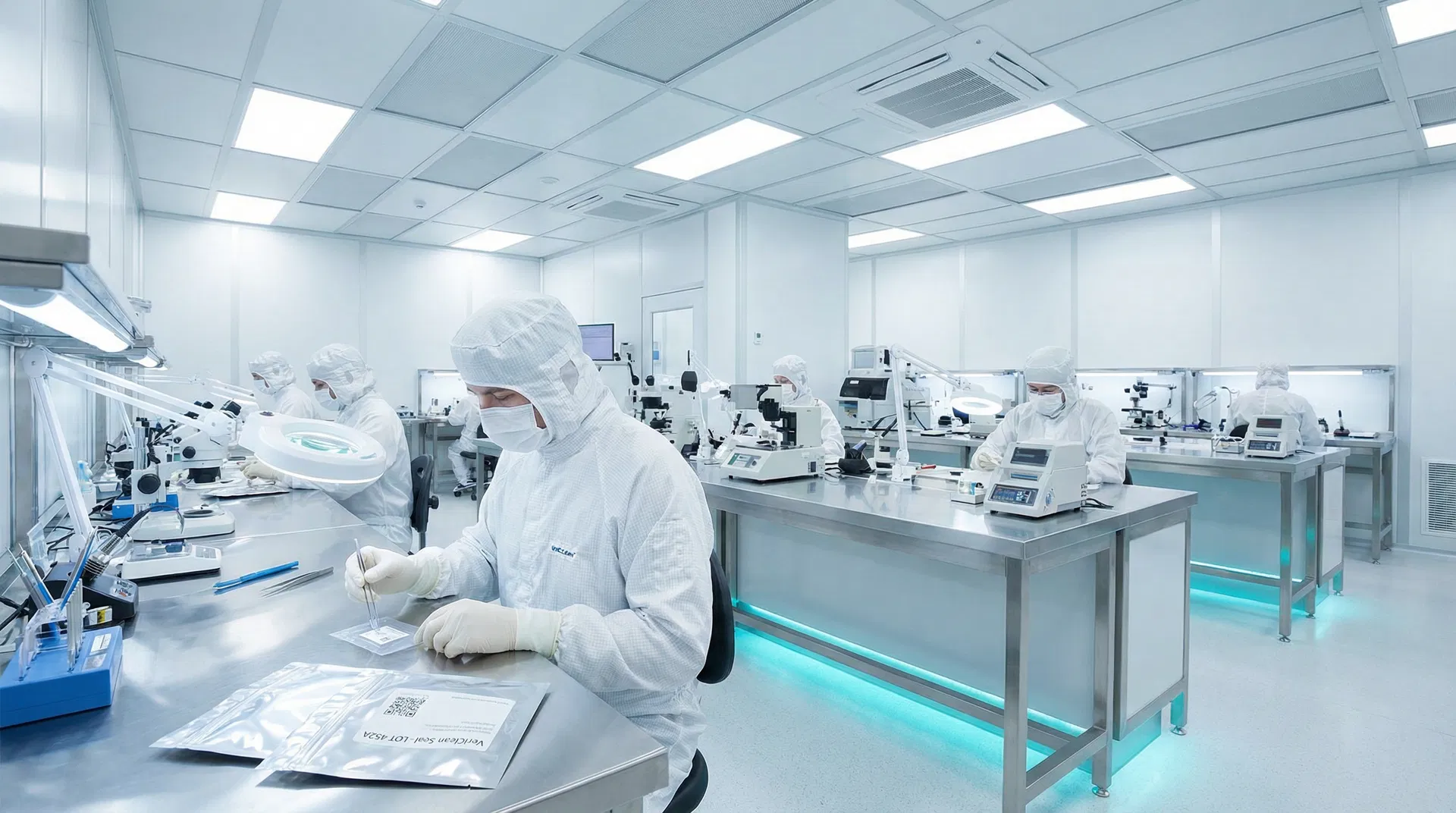
ISO Class 7 cleanroom facilities with controlled environment protocols throughout the seal lifecycle.
Full Traceability
QR-coded certificates with optical microscopy and laser particle counting data, statistical process control, and 3-year minimum archival records.
Bioburden: The Hidden Biological Risk
Commodity seals stored in open-bin warehouse environments accumulate colony-forming units (CFUs) on their surfaces. When installed into warm-loop D2C systems (35–45°C), these organisms proliferate, forming biofilm on microchannel walls. Biofilm degrades coolant chemistry, accelerates corrosion, and increases thermal resistance — the same failure mode as “diesel bug” in fuel storage.
VeriClean processing achieves 92–100% bioburden reduction per ISO 11737-1 testing, eliminating the biological contamination vector at source.
Data & IP Framework
VCQ reports are your data. Pacific Rubber retains no rights to your seal specifications or contamination profiles.
Serving: Direct-to-Chip (D2C) OEMs • CDU Manufacturers • Cold Plate Vendors • Hyperscalers • Medical Device sterilization leaders
Partnering with industry leaders: Parker • Kalrez
Chain of Custody Protocol
VeriClean Seals™ follow a rigorous chain of custody from cleanroom processing through final installation, ensuring contamination control at every step.
Receiving & Inspection
Document arrival in chain of custody record. Visual check for damage, temperature exposure, moisture.
Storage Protocols
Temperature and Humidity Controlled environment. Sealed until use. FIFO stock rotation.
Cleanroom Installation
Open only in ISO Class 7 or better cleanroom. Install immediately to minimize exposure.
Why Seals Matter More in 2026
The AI inflection point has triggered an unprecedented buildout surge. Liquid cooling adoption is projected to reach 30-40% by end of 2026, up from 19-22% today.
Rising Chip Density
Modern AI workloads operate at 700-1,500W per GPU, driving total rack densities to 80-120kW. This exponential leap creates thermal management challenges that air cooling simply cannot address.
Investment Concentration
New capital expenditure is flowing almost exclusively into High Density Compute (HDC) facilities. The AI inflection point and GPU roadmaps have triggered unprecedented buildout.
Technology Frontier
Liquid cooling is new territory for many teams. As thermal demands escalate, previously negligible risk factors—seals, coolant chemistry, assembly—suddenly become critical failure points.
Standards Evolution
Standards for coolant cleanliness (OCP, ASHRAE) are emerging, but seal cleanliness specifications remain largely unaddressed. This creates a dangerous gap.
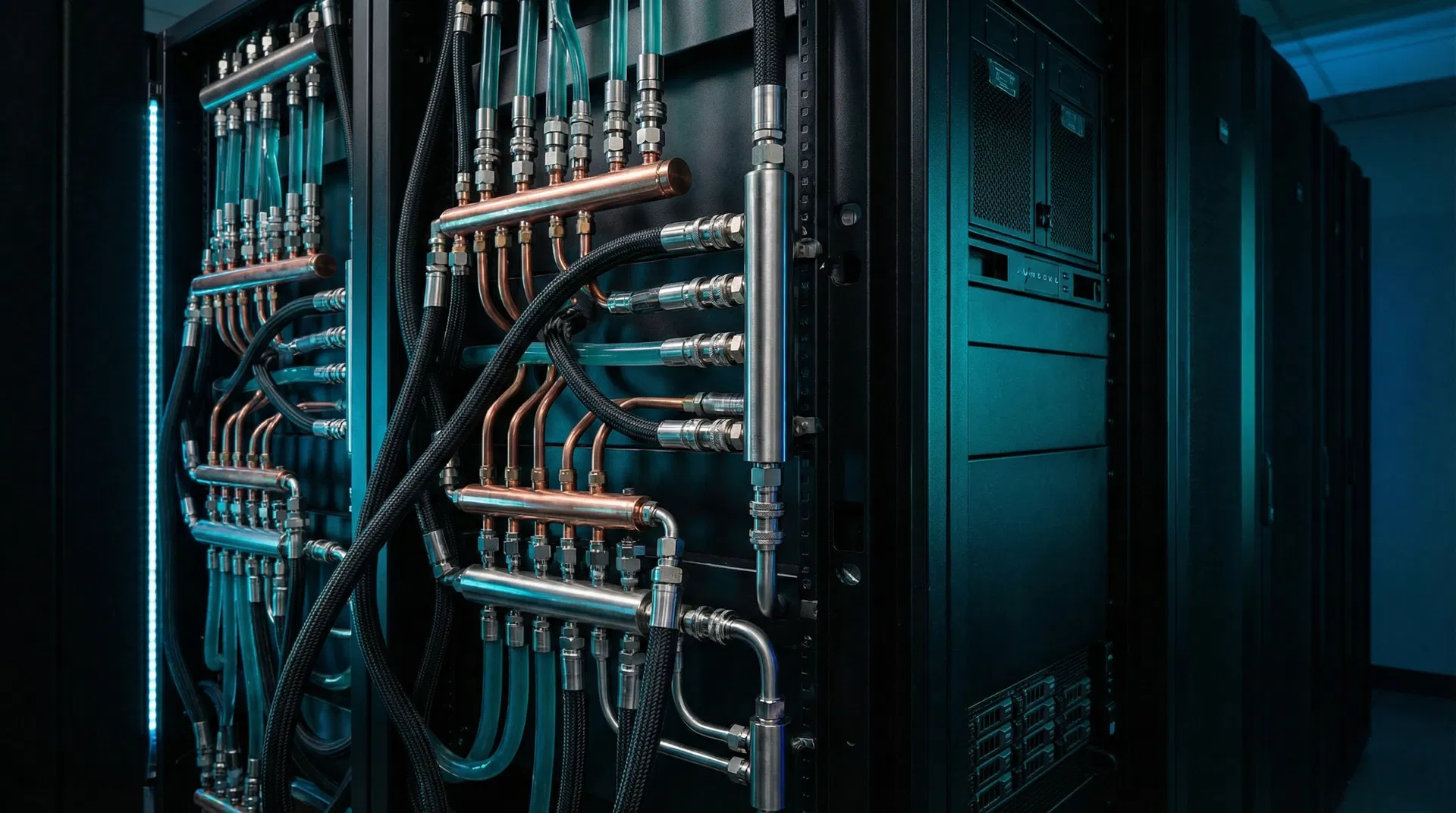
Liquid-cooled server rack showing coolant manifolds, braided hose assemblies, and quick-disconnect fittings — every seal in this loop is an uncontrolled variable without VeriClean Seals™.
Close the Contamination Gap
VeriClean Seals™ provide reliability insurance for liquid cooling deployments. Get data-driven confidence instead of commodity gambling.
VeriClean Seals
Qualification Service
The VCQ is a decision-grade analytical qualification service that characterizes the surface-particulate contamination profile of your incumbent BOM seals. It compares the particle load of your stocked seals against industry baselines and demonstrates the controls achievable with VeriClean Seals™.
Process: submit min 35 samples → optical microscopy + laser particle counting (1.3µm lower bound, 16 size bins to 50µm+) → certified report with full data results & risk reduction score. 30-minute post-evaluation consult with technical team included. Available for all elastomer types — NBR to FFKM.
Quantify your current seal-borne particle load and establish documented evidence of contamination control for warranty defense and brand protection.
Learn how to add surface particulate controls to existing seal specifications without redesigning your BOM or changing suppliers.
Gain a data-driven path to creating a differentiated high-purity product variant — backed by independent test data.
Access novel, data-backed insights to inform ongoing supplier development decisions and qualification programs.
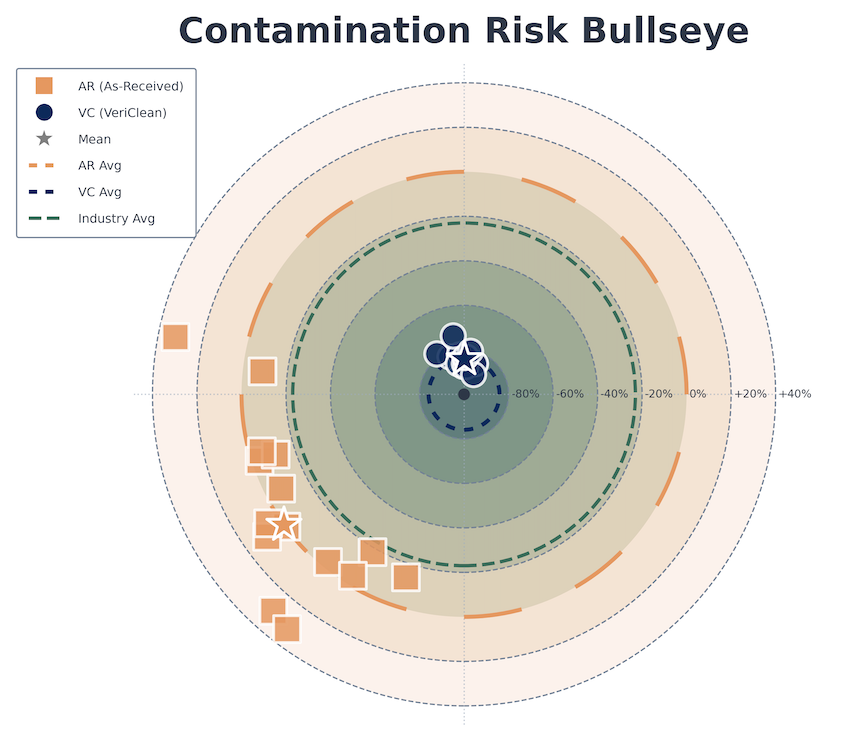
The Contamination Risk Bullseye shown here is drawn from one of several analytical outputs in the VCQ report. Each marker represents independent particle extraction and quantification for an individual seal: n=15 as-received measurements and n=15 VeriClean-processed. The distribution of as-received markers across the chart reflects the seal-to-seal variability within a single submitted lot, and positions that population against the same compound family average from PRP's full supply chain dataset. The complete VCQ report delivers this and other visualizations alongside all raw particle count and volume data across 16 size bins.